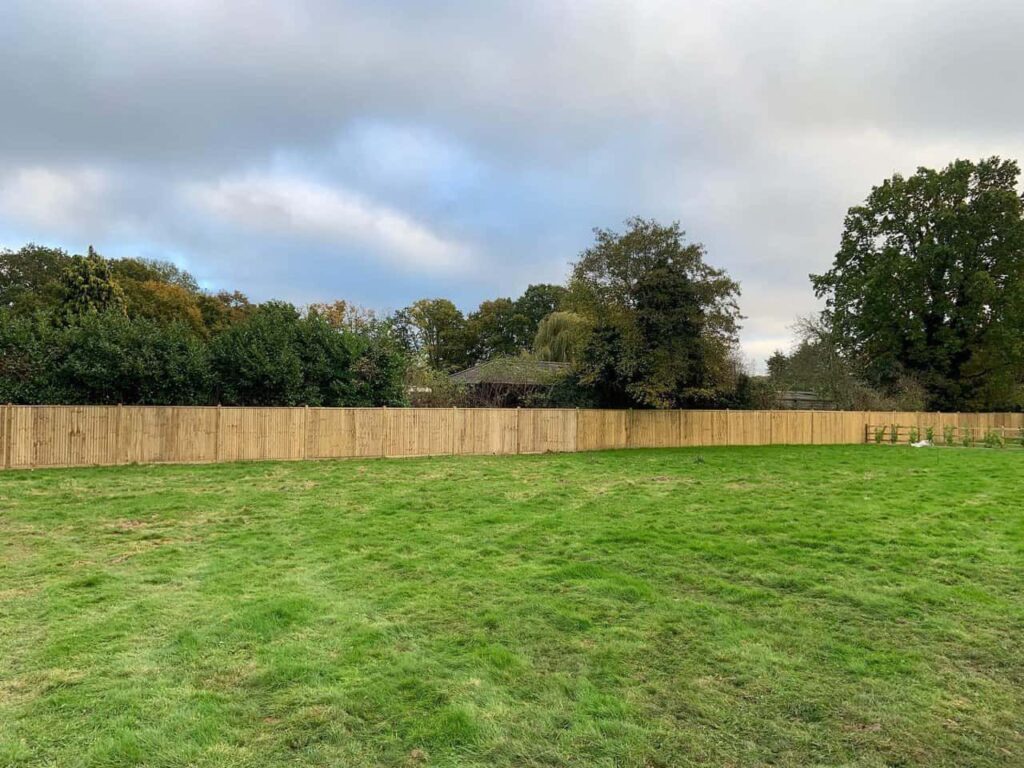
Can Professional Fencing Repairs Improve a Boundary That Looks Tired as Well as Unstable?
A garden fence has both a practical and visual role. It defines the boundary, provides privacy, helps create a secure outdoor space and contributes significantly to how the garden looks. When fencing begins to lean, loosen or deteriorate, it can therefore affect much more than the boundary itself. Even an otherwise well-maintained garden can appear neglected when the fencing surrounding it is in poor condition.
The good news is that an ageing fence does not necessarily require complete replacement. Where much of the existing structure remains serviceable, professional fencing repairs can often restore stability while considerably improving its overall appearance. For property owners in Sevenoaks, Kent, Fast Fix Fencing Sevenoaks provides professional fencing solutions focused on achieving secure, practical and visually tidy boundaries.
Why Fencing Can Become Tired and Unstable at the Same Time
Appearance and structural condition often deteriorate together because fencing is continually exposed to outdoor conditions.
Over time, problems can develop through:
- Repeated wind loading
- Moisture affecting timber
- Ground movement around posts
- Loose fixings
- Damaged panels
- Vegetation pressing against the fence
- General weathering
A fence may initially look slightly uneven before movement becomes increasingly noticeable. Addressing the cause early can help prevent further sections from being affected.
Leaning Fencing Often Starts with the Posts
When an entire section of fencing begins leaning, the panels themselves may not be the main problem.
Fence posts provide the structural support for the boundary. If a post becomes loose, deteriorates or loses stability within the ground, the connected panels can begin moving with it.
Simply attempting to straighten the visible panel without addressing the supporting post is unlikely to provide a dependable result.
Professional repair involves establishing why the fence has moved before deciding what needs attention.
Damaged Sections Do Not Always Mean Replacing Everything
One advantage of having fencing professionally assessed is that repair can often be targeted at the sections that genuinely require attention.
Depending on the construction and condition of the existing fence, work may involve:
- Replacing damaged posts
- Renewing individual panels
- Securing loose components
- Correcting localised movement
- Replacing deteriorated fixings
- Restoring damaged sections
If substantial parts of the boundary remain sound, retaining them can avoid unnecessary disruption while restoring the fence where it has weakened.
Repairs Can Make a Noticeable Visual Difference
Structural repairs frequently improve appearance at the same time.
A fence with leaning posts, uneven panels or loose sections creates irregular lines that immediately draw attention. Restoring these components can create a straighter and more consistent boundary.
Professional repairs can help achieve:
- Better alignment
- More consistent panel heights
- Cleaner boundary lines
- Neater connections between sections
- A more cared-for overall appearance
This can make the entire garden feel more organised.
A Straighter Boundary Can Transform the Garden
Fencing forms a substantial part of the visual background of many gardens. This means relatively small fencing improvements can have a surprisingly large effect.
Straightening unstable sections can provide a more defined backdrop for:
- Lawns
- Patios
- Planting
- Paths
- Seating areas
Instead of drawing attention for the wrong reasons, the boundary becomes a tidy frame around the rest of the outdoor space.
Professional Repairs Can Restore Privacy
Fencing that has shifted or deteriorated may begin developing unwanted gaps.
Panels can move apart, damaged boards can create openings and leaning sections may reduce the privacy originally provided by the boundary.
Correctly repairing the affected areas can restore a more consistent barrier and help the garden feel enclosed again.
This can be particularly valuable where homeowners rely on fencing to create a comfortable private outdoor environment.
Loose Panels Should Not Be Ignored
A panel that moves noticeably during windy conditions may eventually place additional strain on its fixings and neighbouring posts.
What begins as slight movement can gradually become more significant as repeated wind loading affects the weakened section.
Professional attention can identify whether the problem lies with:
- The panel
- Its fixings
- The supporting posts
- Several components together
Correcting the underlying weakness is more effective than repeatedly securing the same unstable section without understanding why it moves.
Weathered Fencing and Structurally Damaged Fencing Are Different
A fence can look old while remaining structurally sound. Equally, relatively tidy fencing can sometimes have weaknesses that are not immediately obvious.
Professional assessment distinguishes cosmetic weathering from defects affecting performance.
For example, surface ageing does not necessarily mean a timber component needs replacing. However, significant deterioration at an important structural point may require attention even if the rest of the component appears reasonable.
Understanding this difference helps determine how much of the existing fencing can be retained.
Repairing One Weak Section Can Protect the Surrounding Fence
Fencing works as a connected boundary. When one section becomes unstable, movement can sometimes place additional stress on neighbouring components.
A failing post, for example, may allow connected panels to move more freely in windy conditions. Over time, this can affect fixings and adjacent sections that were previously secure.
Prompt professional repair helps restore support before the problem spreads further along the boundary.
When Is Fencing Repair the Right Approach?
Repair can be particularly effective where:
- Most posts remain secure
- Damage is concentrated in particular sections
- Only a small number of panels are affected
- Individual components can be replaced
- The overall fence remains suitable for continued use
The objective should be to restore dependable performance without replacing serviceable sections unnecessarily.
When Might More Extensive Work Be Needed?
There are situations where repeated small repairs may no longer provide a sensible long-term result.
This can happen when:
- Numerous posts have deteriorated
- Large sections are leaning
- Panels are extensively damaged
- Movement affects most of the boundary
- Different sections continually develop new problems
In these circumstances, looking at the boundary as a whole may provide a more dependable solution.
A professional assessment helps establish whether targeted repairs remain appropriate or whether more comprehensive work should be considered.
Why DIY Repairs May Not Address the Cause
A leaning fence can sometimes appear straightforward to fix, but achieving lasting stability requires understanding what is happening beneath and around the visible components.
Simply adding fixings or temporary supports may improve the appearance initially without resolving a loose or deteriorated post.
Professional fencing repairs focus on:
Identifying the weak point
The cause of movement needs to be established before work begins.
Restoring proper support
Posts and supporting components need sufficient stability for the fencing they carry.
Maintaining alignment
Panels should be positioned consistently to create a neat boundary.
Securing connections
Fixings and adjoining components need to work together so the repaired section remains stable.
This approach addresses both appearance and performance.
The Value of Professional Fencing Repairs
Good fencing repair is not simply about making an old fence stand upright again. The aim is to restore the boundary so that it functions properly and integrates neatly with the surrounding garden.
Experienced installation and repair can improve:
- Stability
- Privacy
- Appearance
- Boundary definition
- Long-term usability
Careful workmanship also ensures that serviceable parts of the existing fence are incorporated effectively into the repaired sections.
Professional Fencing Repairs in Sevenoaks
For homeowners in Sevenoaks, Kent, an unstable or tired-looking fence is worth assessing before assuming the entire boundary needs replacing.
At Fast Fix Fencing Sevenoaks, we provide professional fencing services designed around the actual condition of each boundary. Whether individual posts have weakened, panels require attention or several sections have moved out of alignment, we can assess the cause and determine an appropriate way to restore the fence.
Our focus is on creating secure, well-finished fencing that performs its practical role while enhancing the overall appearance of the outdoor space.
Conclusion
Professional fencing repairs can often improve both the stability and appearance of a tired boundary. Replacing weakened posts, securing loose panels, correcting alignment and renewing damaged sections can transform fencing that looks neglected while restoring the privacy and definition it provides.
The important factor is determining whether deterioration is localised or widespread. Where much of the existing fence remains sound, targeted professional repairs may give the boundary a substantial new lease of life. Where problems affect numerous sections, a broader solution may be more appropriate.
For property owners in Sevenoaks, Kent, Fast Fix Fencing Sevenoaks can assess tired or unstable fencing and recommend the work genuinely required. If your boundary has started leaning, moving or looking noticeably worn, contact our team to arrange a professional assessment and discuss the most suitable way to restore it.
Call us on: 01732 440 994
Click here to find out more about Fast Fix Fencing Sevenoaks
Click here to complete our contact form and see how we can help with your fencing needs.