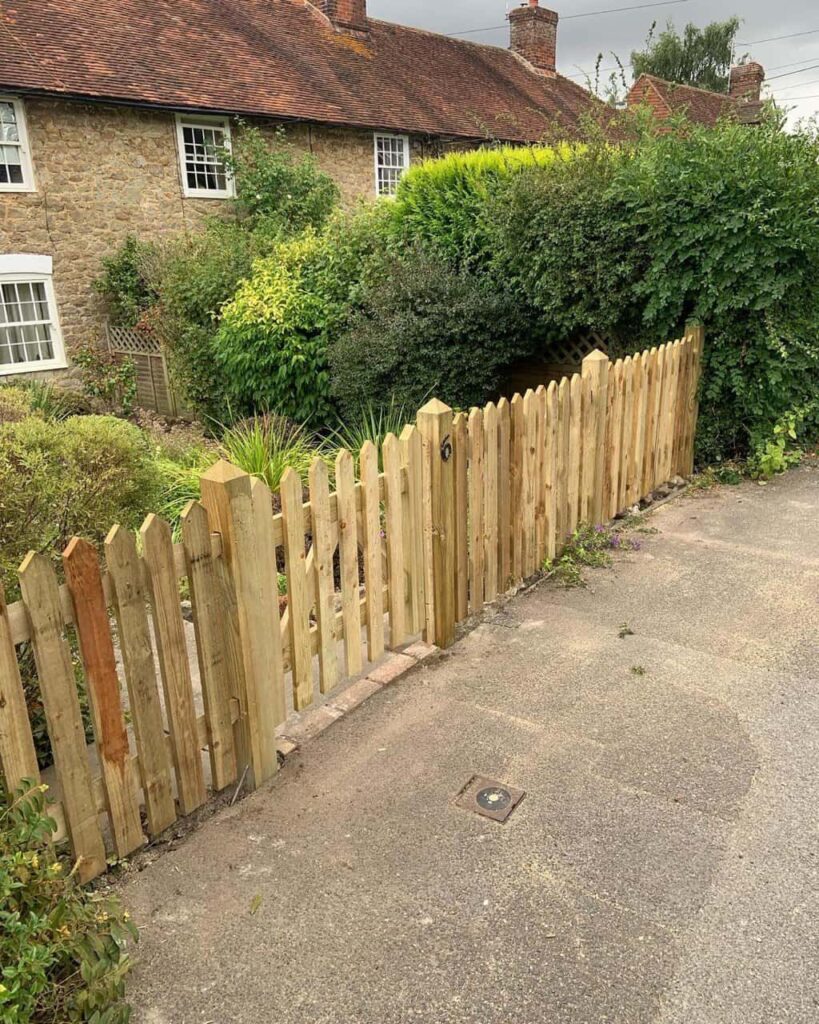
Fence Repair or Replacement: How Do You Make the Right Decision?
When a fence becomes damaged, deciding whether to repair the affected section or replace more of the fencing is not always straightforward. A loose panel or leaning post may be an isolated problem that can be corrected effectively, while similar symptoms across several sections can indicate that the fence is reaching the stage where repeated repairs are no longer the most practical approach.
For property owners in Sevenoaks, Kent, the right decision should be based on the condition of the complete fence rather than one obvious defect. Posts, panels, rails, fixings and the overall alignment all provide useful information. A professional fencing assessment can identify which components remain sound, where deterioration is concentrated and whether repair or replacement is better suited to the condition of the boundary.
Should You Repair Your Fence or Replace It?
Fence repair is usually most appropriate when damage is localised and the surrounding structure remains dependable. Replacement becomes more relevant when deterioration is widespread, several important components have weakened or individual repairs would leave an increasingly unreliable boundary.
The objective should not be to replace fencing unnecessarily. Equally, repeatedly repairing one component at a time can be ineffective if the wider structure is already declining.
Start by Looking at the Fence as a Complete Structure
A fence works as a connected system.
Posts provide support, rails connect sections, panels or boards form the main boundary, and fixings hold the different components together. A problem with one element can therefore influence neighbouring sections.
Before deciding what work is needed, it is useful to assess the entire affected run.
A single damaged panel surrounded by stable fencing presents a very different situation from several leaning sections supported by deteriorating posts.
One Damaged Panel May Only Need a Local Repair
Localised damage does not automatically justify replacing an entire fence.
If one panel has been affected but the posts, adjoining sections and wider fence remain sound, replacing or repairing that particular component may be sufficient.
This can preserve the serviceable parts of the existing installation.
The important question is whether the damage genuinely stops at that section. Checking the surrounding components helps establish whether the visible panel is the complete problem or simply the most obvious sign.
A Loose Fence Panel Can Have More Than One Cause
A panel that moves excessively may not necessarily be defective itself.
Its fixings could have loosened, an adjoining post may have moved or another supporting component could have deteriorated. Replacing the panel without identifying the cause may therefore leave the original weakness unresolved.
Professional assessment helps determine which component actually needs attention.
Where the panel itself remains serviceable, repairing the supporting structure may be a more appropriate solution than replacing sound material.
Leaning Posts Need Careful Assessment
Fence posts are fundamental to the stability of the complete boundary.
When one post begins leaning, neighbouring panels can become misaligned or start moving during windy conditions. If the problem is isolated, repairing or replacing the affected post may restore stability to that section.
Several leaning posts can indicate a more widespread problem.
In that situation, repeatedly addressing them individually may not provide the most dependable long-term result.
Check the Fence at Ground Level
Some of the most important deterioration occurs close to where posts and other components meet the ground.
A fence can appear relatively sound higher up while its supporting sections have weakened lower down. Movement at ground level may eventually cause leaning, instability and strain on neighbouring components.
When assessing whether to repair or replace fencing, these areas deserve particular attention.
The visible condition of panels alone does not necessarily reveal the structural condition of the complete fence.
Rot Should Be Assessed for Its Extent
Timber fencing can deteriorate when sections remain exposed to moisture over time.
Where deterioration is confined to one replaceable component, local repair may remain practical. If it affects numerous posts, rails or panels, the situation becomes different.
The extent matters more than the presence of one damaged area.
A professional assessment can establish whether enough dependable material remains to make repair worthwhile or whether deterioration is distributed too widely across the fence.
Repeatedly Broken Components Can Reveal a Wider Weakness
If the same part of a fence repeatedly requires attention, it is worth investigating why.
A panel that continually becomes loose may be affected by movement in its supporting posts. Likewise, recurring instability across one section can indicate that the problem extends beyond individual fixings.
Repair history provides useful information when making the repair-or-replace decision.
Where previous work has remained successful and the rest of the fence is sound, another local repair may be perfectly reasonable. Repeated failure across connected components deserves broader assessment.
Several Damaged Sections Change the Decision
The number of defects matters.
One damaged panel and one sound fence usually favour a localised approach. Several damaged panels, leaning posts, loose rails and general instability suggest that deterioration has become more extensive.
At this stage, it is useful to stop viewing every defect independently.
A collection of smaller problems can sometimes indicate that the overall fence has reached a similar stage of deterioration.
Wind Can Expose Existing Fence Weaknesses
Strong winds can reveal weaknesses that were already developing within a fence.
A sound, well-supported section may remain stable while a deteriorated post begins leaning or a loose panel becomes displaced. The weather may expose the problem rather than being its only underlying cause.
After wind-related movement, the surrounding fence should therefore be assessed.
Simply repositioning the visibly affected section may not be sufficient if neighbouring supports have also become unstable.
A Fence That Moves Excessively May Need More Than New Fixings
Some movement can occur within fencing, particularly during windy conditions, but obvious instability deserves investigation.
If several panels move together, the issue may involve the supporting posts rather than individual fixings. Continually adding fixings without addressing movement elsewhere may provide only a temporary improvement.
The cause of the instability should guide the repair.
This is particularly important where one weak component is placing additional strain on neighbouring sections.
Misalignment Can Indicate Structural Movement
A fence line that was previously straight may gradually begin to look uneven.
Individual panels can tilt, posts may move out of alignment or the top of the fence can develop a noticeable variation. These changes can indicate that supporting components have shifted.
Minor isolated movement may be repairable.
Where the misalignment extends across much of the boundary, a wider approach may be necessary to restore consistent support and appearance.
Repair Makes Sense When the Surrounding Fence Remains Sound
The strongest case for fence repair is when the defect is clearly contained.
Examples can include a damaged panel between stable posts, one defective post within an otherwise dependable run or a limited section where fixings have failed.
In these circumstances, retaining the sound parts of the fence is usually sensible.
Professional repair should address the cause of the local problem while avoiding unnecessary disturbance to components that continue to perform correctly.
Replacement Becomes More Relevant When Problems Are Widespread
Replacement should be considered when deterioration affects a substantial proportion of the fence.
This could include numerous weakened posts, widespread timber deterioration, repeated panel failure or significant instability across several connected sections.
The decision should still be based on condition rather than simply the age of the fence.
An older fence can remain suitable for repair if most of its structure is sound, while a more recent installation can require broader work if important components have deteriorated prematurely.
Partial Replacement Can Sometimes Be the Right Approach
The choice is not always between repairing one small defect and replacing the entire boundary.
Sometimes one run of fencing has deteriorated considerably while another remains dependable. In these circumstances, replacing the affected section while retaining sound fencing elsewhere can provide a proportionate solution.
This is another reason why assessing the fence in sections is useful.
The scope of the work can reflect where deterioration actually exists rather than treating every part of the boundary identically.
Appearance Can Influence the Decision
Structural condition should be the primary consideration, but appearance can also matter.
Repeated repairs carried out at different times can sometimes leave a fence looking inconsistent. Replacement panels may differ from older sections, while numerous repaired areas can make the boundary appear increasingly patchwork.
This does not automatically mean replacement is necessary.
However, where widespread deterioration already exists, the desired finished appearance can reasonably form part of the decision about how much fencing should be renewed.
Consider Whether the Fence Still Provides the Required Privacy
A fence may remain standing while no longer performing its intended purpose effectively.
Movement between sections, damaged panels or significant gaps can reduce privacy within the garden. Where the problem is confined to one location, repair may restore the boundary effectively.
Where gaps and movement are appearing throughout the fence, broader replacement may provide a more consistent solution.
The fence should therefore be assessed according to how well it functions as well as how it looks.
Stability Is More Important Than Cosmetic Damage
Not every mark or imperfection requires structural work.
Surface weathering can affect appearance without necessarily compromising the stability of a fence. Conversely, a fence that looks reasonably presentable can still contain weakened posts or connections.
It is important to distinguish cosmetic changes from structural deterioration.
A professional assessment should prioritise whether the fence remains stable, adequately supported and suitable for continued use before considering appearance alone.
Previous Repairs Can Help Reveal the Fence’s Condition
The history of a fence can provide useful clues.
A small number of successful repairs over many years does not necessarily indicate a problem. Individual components can deteriorate at different rates and be replaced as required.
The situation becomes different when new defects appear repeatedly across neighbouring sections.
If several posts, panels or rails have required attention within a relatively short period, the wider condition of the fence may deserve closer examination.
Repairing Early Can Prevent Damage From Spreading
A local fence problem can sometimes affect surrounding components if it is ignored.
For example, a leaning post may place additional strain on adjoining panels. A loose section moving repeatedly in windy conditions can affect its fixings and connections.
Addressing a developing defect while surrounding components remain sound can help prevent a relatively contained repair from becoming more extensive.
Early intervention is therefore particularly useful where the underlying problem is clearly identifiable.
Warning Signs That Repair May Be Appropriate
A localised repair may be suitable where:
- only one or two components are damaged;
- surrounding fence posts remain stable;
- most panels are still in good condition;
- the fence line remains generally straight;
- deterioration is confined to a clearly defined area;
- the problem has an identifiable local cause;
- previous repairs elsewhere remain dependable.
The condition of the surrounding fence is what makes a targeted approach practical.
Signs That Broader Replacement May Need Considering
A wider replacement may be more appropriate where:
- several posts are leaning or unstable;
- deterioration is present across numerous timber components;
- multiple panels are damaged or repeatedly becoming loose;
- the fence line has become extensively uneven;
- previous repairs are beginning to fail in several places;
- new problems continue appearing across adjoining sections;
- a substantial part of the fence no longer provides reliable support or privacy.
No single symptom automatically determines the answer. It is the overall pattern of deterioration that matters.
Why Professional Fence Assessment Makes a Difference
Repairing the wrong component can leave the genuine problem unresolved.
A loose panel might actually be caused by a moving post, while an uneven section could involve several connected supports. Professional assessment allows the visible damage to be considered alongside the wider structure.
This helps determine whether repair can reliably restore the affected area or whether replacement would provide a more suitable solution.
The aim should always be to retain sound fencing where practical while addressing deterioration thoroughly enough to avoid repeated problems.
Fence Repairs and Replacement in Sevenoaks, Kent
At Fast Fix Fencing Sevenoaks, we understand that deciding between fence repair and replacement should be based on the actual condition of the boundary.
Some problems are genuinely localised and can be resolved without disturbing serviceable fencing. Others involve several connected components and require a broader approach to restore stability and appearance.
For property owners in Sevenoaks, Kent, a professional assessment can help establish which parts of the fence remain dependable and what work is appropriate for the sections that have deteriorated.
Conclusion
The decision between fence repair and replacement depends primarily on how far the damage has spread. A broken panel, isolated loose fixing or single weakened post can often justify a targeted repair when the surrounding fence remains sound.
When several posts are unstable, panels repeatedly become loose or deterioration is appearing throughout the boundary, replacement of a larger section may be more appropriate. The important point is not to assume that every damaged fence requires complete replacement or that every visible defect can be solved with another small repair.
If your fence in Sevenoaks, Kent is leaning, damaged or becoming increasingly difficult to maintain, contact Fast Fix Fencing Sevenoaks. We can assess the condition of the affected sections and recommend an appropriate repair or replacement approach based on what the fence genuinely requires.
Call us on: 01732 440 994
Click here to find out more about Fast Fix Fencing Sevenoaks
Click here to complete our contact form and see how we can help with your fencing needs.