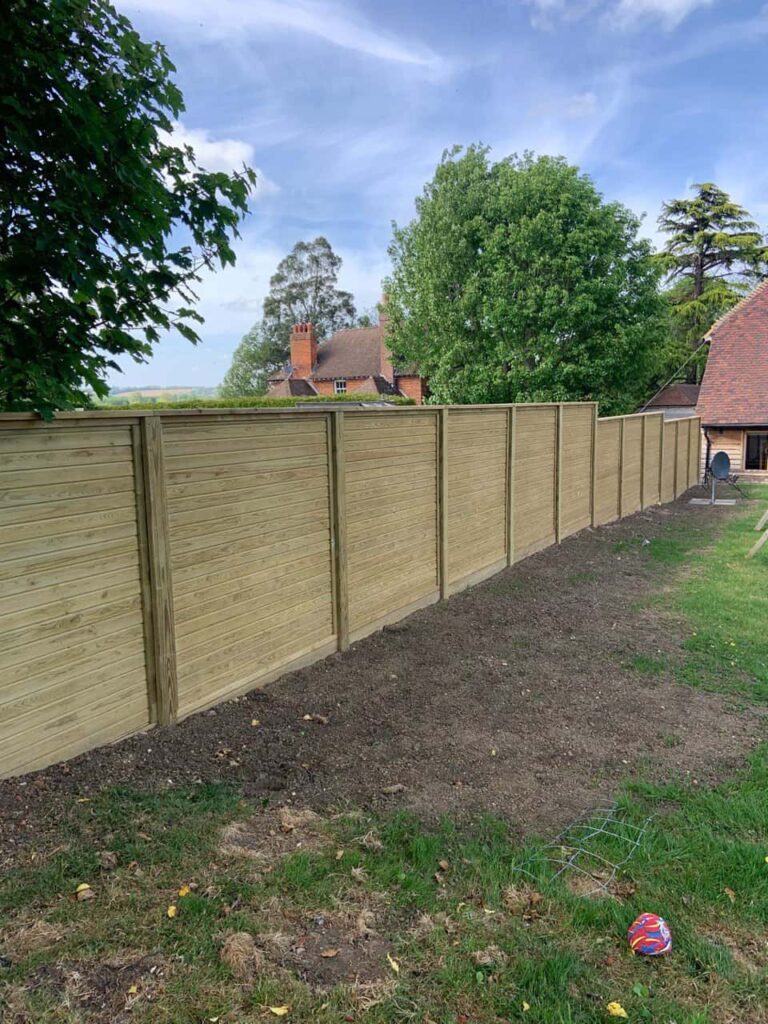
What Are the Most Common Causes of Garden Fence Damage?
A garden fence is exposed to changing weather, ground movement, vegetation and everyday use throughout the year. Damage can begin with one loose board or leaning post, but defects often spread when the underlying cause remains unresolved.
For property owners in Sevenoaks, Kent, understanding why a fence has deteriorated helps determine whether it needs a localised repair, replacement components or more extensive reconstruction. A professional assessment should examine the posts, panels, fixings and ground conditions rather than treating only the most visible damage.
Why Garden Fences Become Damaged
Fence failure is rarely caused by the panels alone. Posts, gravel boards, rails, fixings and surrounding ground all contribute to the stability of the boundary. The following are among the most frequent causes of damage.
Strong Winds
Fence panels create a broad surface for wind to push against. During strong gusts, pressure transfers from the panels to the posts, fixings and foundations.
Wind damage may include:
- loose or missing boards
- cracked panels
- leaning posts
- separated rails
- failed fixings
- movement at ground level
A fence that repeatedly moves in moderate winds may already contain weakened posts or loose connections. Replacing one broken panel will not provide a lasting solution if the supporting structure is unstable.
Moisture and Timber Decay
Timber can deteriorate when it remains damp for extended periods. The sections nearest to the ground are particularly vulnerable because they receive moisture from soil, vegetation and surface water.
Early warning signs can include:
- softened or crumbling timber
- dark discolouration
- splitting near the base
- loose screws or nails
- posts moving when touched
- rails pulling away from their fixings
Decay may be concealed below ground or behind dense planting. By the time a post begins leaning, its buried section may already have lost much of its strength.
Weak or Deteriorated Fence Posts
Posts carry the weight of the fence and resist wind pressure. If they are undersized, inadequately supported or affected by decay, the panels between them can begin to move.
A single weak post may cause several adjoining sections to lean. The surrounding rails and fixings then experience additional strain, potentially turning a localised defect into a wider problem.
Professional repair should establish whether the post itself, its foundation or the nearby ground has failed.
Ground Movement
Soil conditions can change as the ground becomes wet, dries out or settles. These changes may cause posts to shift, particularly where their foundations are shallow or inconsistent.
Ground movement can lead to:
- uneven fence heights
- gaps beneath panels
- posts leaning in different directions
- gates becoming difficult to close
- rails separating from posts
- repeated cracking around foundations
Correcting the alignment without stabilising the post may only provide a temporary improvement.
Overgrown Trees, Hedges and Climbing Plants
Vegetation can place considerable pressure on a fence. Branches may rub against panels, roots can disturb posts, and dense climbing plants add weight while trapping moisture against the timber.
Overgrown foliage can also prevent airflow and make early decay difficult to see. Following windy weather, branches resting on the fence may cause rails or boards to split.
Vegetation should be managed carefully so the fence can remain visible, dry and free from unnecessary loading.
Impact Damage
Garden equipment, falling branches and other accidental impacts can damage an otherwise stable fence. Gates and sections beside access routes are particularly exposed to repeated contact.
Impact damage may crack a panel, loosen a post or distort metal fixings. Even when the damage looks minor, the connections on either side should be checked because the force may have transferred beyond the visible mark.
Poor Initial Installation
A fence may deteriorate prematurely if its posts, foundations, rails or fixings were not suited to the location. Inconsistent post spacing and inadequate edge support can also place uneven loads across the boundary.
Potential installation-related problems include:
- posts set too shallowly
- panels fitted without sufficient support
- unsuitable fixings
- weak connections between rails and posts
- poor alignment
- insufficient clearance above the ground
Repair work should correct these construction issues rather than simply reattaching loose components in the same way.
Failed or Corroded Fixings
Screws, nails, brackets and clips hold the individual fence components together. As these fixings loosen or corrode, panels may rattle, rails can separate and boards may begin to move.
A fence can therefore appear structurally sound while its connections are weakening. Replacing unsuitable fixings and checking the surrounding timber can restore stability where the main components remain in good condition.
Damaged Gravel Boards
Gravel boards protect fence panels from direct contact with soil and moisture. If they crack, move or sink, the panels above may lose support or begin touching the ground.
Damage at the base of the fence should be inspected promptly. A failed gravel board can be a localised issue, but it may also indicate that posts or ground levels have shifted.
Age and General Weathering
Even a well-installed fence will gradually weather. Timber may split, panels can distort and fixings may loosen after years of exposure.
Age alone does not mean the entire fence needs replacing. Sections that remain structurally sound may be suitable for repair, while individual posts, rails or panels can sometimes be renewed.
Replacement becomes more appropriate when deterioration affects several connected components and the remaining fence no longer provides a stable foundation for further repairs.
Repair or Replace?
A local repair may be suitable when damage is confined to one panel, rail, fixing or post. More extensive work may be needed where:
- several posts are leaning
- decay is widespread
- panels repeatedly become loose
- the fence moves along a long section
- previous repairs continue to fail
- gates and adjoining panels are misaligned
- the original construction is inadequate
The most suitable solution depends on the condition of the supporting structure, not simply the number of damaged boards.
Conclusion
The most common causes of garden fence damage include strong winds, timber decay, weakened posts, ground movement and overgrown vegetation. Impacts, failed fixings, poor installation and general weathering can also reduce the stability of a boundary.
Identifying the cause is essential because repairing the visible damage alone may allow the same problem to return. If your garden fence in Sevenoaks, Kent is leaning, loose or deteriorating, Fast Fix Fencing Sevenoaks can assess the complete structure and recommend an appropriate repair or replacement. Contact the team to arrange a professional fence assessment.
Call us on: 01732 440 994
Click here to find out more about Fast Fix Fencing Sevenoaks
Click here to complete our contact form and see how we can help with your fencing needs.